Roof types we install, repair and replace
Every roof type behaves differently in Arizona heat. Here's a plain-English guide to the roofs we work on and how to choose the right one.
Last updated
The short answer
The most common Arizona roof types are concrete or clay tile (very long-lasting and well suited to heat), asphalt shingles (cost-effective), spray polyurethane foam (seamless and insulating for flat roofs), elastomeric coatings (reflective protection for flat roofs), and modified bitumen or other flat-roof systems. Your roof's slope decides which ones are options, and Integrity Roofing works on all of them.
How to choose the right roof
Start with your roof's slope. Tile and shingle need a sloped roof, while foam, coatings and modified bitumen are made for flat and low-slope areas. Then weigh your budget, how long you plan to stay, the look you want, and your HOA's rules.
Weight matters too. Tile is far heavier than shingles, so a home framed for shingles may need an engineering review before it can carry tile. We'll walk you through the options that fit your home and give you a clear estimate for each.
Sloped roof options: tile and shingle
Concrete and clay tile is the most familiar roof in the Valley. The tiles shade the roof and shed most of the water, while the underlayment beneath them does the real waterproofing. Tiles can outlast several underlayment cycles, which is why many tile roofs get a re-felt rather than a full replacement.
Asphalt shingles cost less up front and go on quickly. They wear faster in Arizona sun than in cooler places, so color choice and attic ventilation make a real difference in how long they last. See our sloped roofs page for pitch, valleys and ventilation basics.
Flat and low-slope options: foam, coatings and modified bitumen
Flat roofs are common on commercial buildings, patios, garages, additions and Pueblo-style homes. Spray foam goes on as a liquid, expands into one seamless layer, adds insulation, and can be tapered to help water drain. It needs a protective coating that is renewed over time.
Elastomeric coatings add a reflective, waterproof skin to a sound flat roof. Modified bitumen is a rolled roofing with a cap sheet that resists foot traffic. Our flat roofing page covers drainage, parapets and scuppers in more detail.
What Arizona heat does to every roof
Roof surfaces in the Valley can get far hotter than the air temperature on a summer afternoon, then cool off sharply at night. That daily expansion and contraction, plus intense UV, is what ages roofs here.
- Tile underlayment dries out and turns brittle, often around 20–25 years
- Shingles lose granules, curl and crack as the asphalt hardens
- Foam and flat-roof coatings chalk and thin, exposing the layer beneath
- Sealants around vents, skylights and flashing shrink and pull away
How each roof handles monsoon season
Monsoon season runs June 15–September 30 and brings sudden wind, dust and heavy rain. Sloped roofs shed water fast, but wind can lift shingles or shift loose tiles. Flat roofs depend on clear drains and scuppers; a clogged scupper during a downpour can send water over flashing that was never meant to sit underwater.
A quick look before the season starts, and again after a big storm, catches most problems early. If you see damage, our storm damage page explains what to check.
Energy, reflectivity and solar
A cool roof reflects more sunlight and absorbs less heat. White foam coatings and elastomeric coatings are among the most reflective surfaces you can put on a roof. Light-colored tile benefits from the air space under the tiles, and lighter shingles run cooler than dark ones.
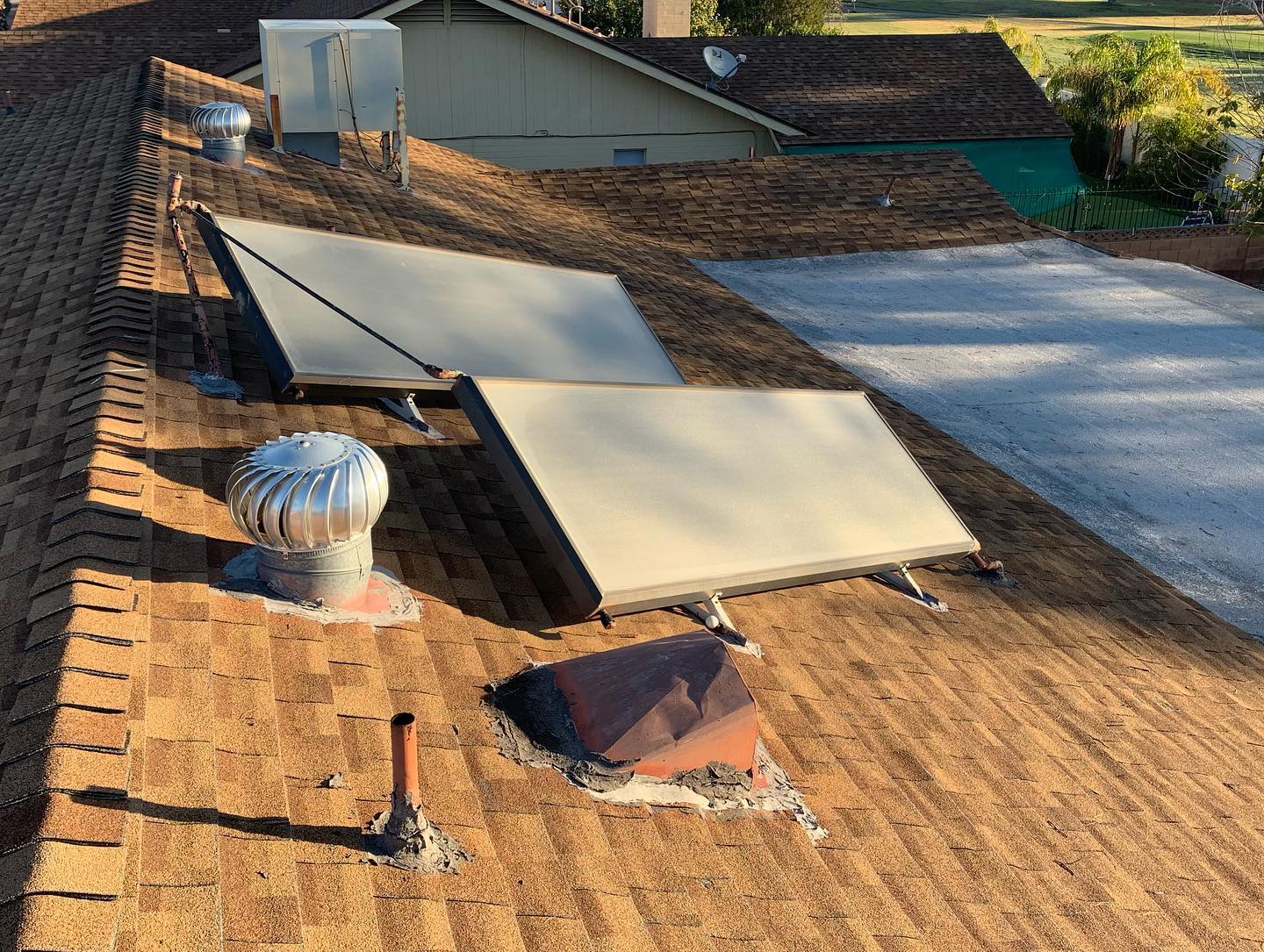
Solar panels can go on every roof type we work on, but each one needs its own mounting and flashing approach. If your roof is near the end of its life, it usually makes sense to replace or re-felt it before panels go on, so they don't have to come off again soon after.
Arizona roof types at a glance
General guidance only. The right choice depends on your building, budget and HOA rules.
| Roof type | Best for | Typical lifespan | Heat performance |
|---|---|---|---|
| Concrete / clay tile | Sloped residential roofs | Tiles 50+ yrs; underlayment ~20–25 yrs | Excellent: air space under tiles |
| Asphalt shingles | Budget-friendly sloped roofs | 15–25 years | Good; lighter colors help |
| Spray foam (SPF) | Flat & low-slope roofs | 20+ years with recoating | Excellent: insulating & reflective |
| Elastomeric coating | Protecting existing flat roofs | Recoat every several years | Excellent: highly reflective |
| Flat / modified bitumen | Flat commercial & additions | 10–20 years | Good with reflective cap sheet/coating |
Explore each roof type

Spray Foam Roofing
Our featured system: seamless, insulating, renewable roofs.
Learn more
Tile Roofs
Concrete & clay tile repair, re-felt and replacement.
Learn more
Asphalt Shingles
Repair and replacement for shingle roofs.
Learn more
Foam Roofing
Seamless, insulating flat roofs: install, repair, recoat.
Learn moreFrequently asked questions
Still have a question? Call the office at 602-548-3770, Monday to Friday, 7 am to 5 pm.
What is the best roof type for Arizona heat?
Tile and spray foam are top performers in Arizona heat. Tile benefits from the air space beneath it, and foam insulates and carries a reflective coating. The best choice depends on your roof's slope and budget.
What is the longest-lasting roof in Arizona?
Concrete and clay tiles can last 50 years or more. Keep in mind that the underlayment beneath tile typically needs replacing sooner, often after about 20–25 years.
What roof is best for a flat roof in Arizona?
Spray polyurethane foam is a popular choice for flat roofs in Arizona because it's seamless, insulating and can be recoated to extend its life. Modified bitumen and coated systems are also common.
Can I switch from shingles to tile?
Sometimes. Tile is much heavier than shingles, so the roof structure must be able to support it. An engineering review may be needed. We can tell you what's involved.
Are shingles a good choice in Arizona?
Yes, for many homes. Asphalt shingles are cost-effective and come in many colors, though Arizona heat and UV tend to shorten their life compared with cooler climates. Lighter colors and good attic ventilation help.
Which roof types does Integrity Roofing work on?
We work on concrete and clay tile, asphalt shingle, spray foam, elastomeric-coated, modified bitumen and other flat roofs, on both sloped and flat roofs, for homes and businesses.
How do I tell what type of roof I have?
Look from the street or a ladder at the eaves. Tile is thick and shaped, often curved or flat with visible overlaps. Shingles are thin, flat and gritty. Flat roofs are usually hidden behind parapet walls and covered in foam, a coating or a rolled cap sheet.
Can a home have more than one roof type?
Yes, and it's common in the Valley. Many tile or shingle homes have a flat section over a patio, addition or entry that uses foam or a coated system. Each section needs care suited to its material.
How much does each roof type cost?
Every roof is different, and price depends on size, pitch, access, material and the condition of the deck underneath. Our Roofing Cost Guide at /resources/roofing-cost-guide/ explains what drives cost for each type, and we give a written estimate after looking at your roof.
Which roof type holds up best in monsoon storms?
A well-installed tile or shingle roof sheds water quickly, and a seamless foam roof has no seams for wind-driven rain to get into. Installation quality, flashing and clear drainage matter more than the material alone.
Are cool roofs worth it in Arizona?
Reflective roofs absorb less heat, which can lower cooling demand and reduce wear on the roof itself. Actual savings depend on your insulation, ductwork and HVAC system, so treat energy savings as a benefit rather than a guarantee.
Can solar panels go on any roof type?
Yes, with the right mounting and flashing for that material. It's best to make sure the roof has plenty of life left before panels are installed, since removing and resetting them later adds cost.
Does my HOA control what roof I can install?
Many Arizona HOAs set rules on roof material, color and profile, especially for tile. Check your HOA's guidelines and get any required approval before work begins.
How do I get an estimate for my roof?
Call us at 602-548-3770, Monday to Friday, 7 am to 5 pm. If we don't answer, leave a message and we'll return your call within 24 hours.
Let's take a look at your roof.
Call the office at 602-548-3770 to schedule an estimate, Monday to Friday, 7 am to 5 pm. If we don't answer, leave a message and we'll return your call within 24 hours.