
Our work
A look at roofing projects our crew has completed across the Phoenix Valley — tile, shingle, foam and flat roofs, before and after.
Last updated
The short answer
These photos show real Integrity Roofing projects in Gilbert, Mesa, Chandler, Phoenix and nearby communities. Select any photo to view it larger.
Roofs we've worked on
Select a photo to see it larger.
What you'll see in these photos
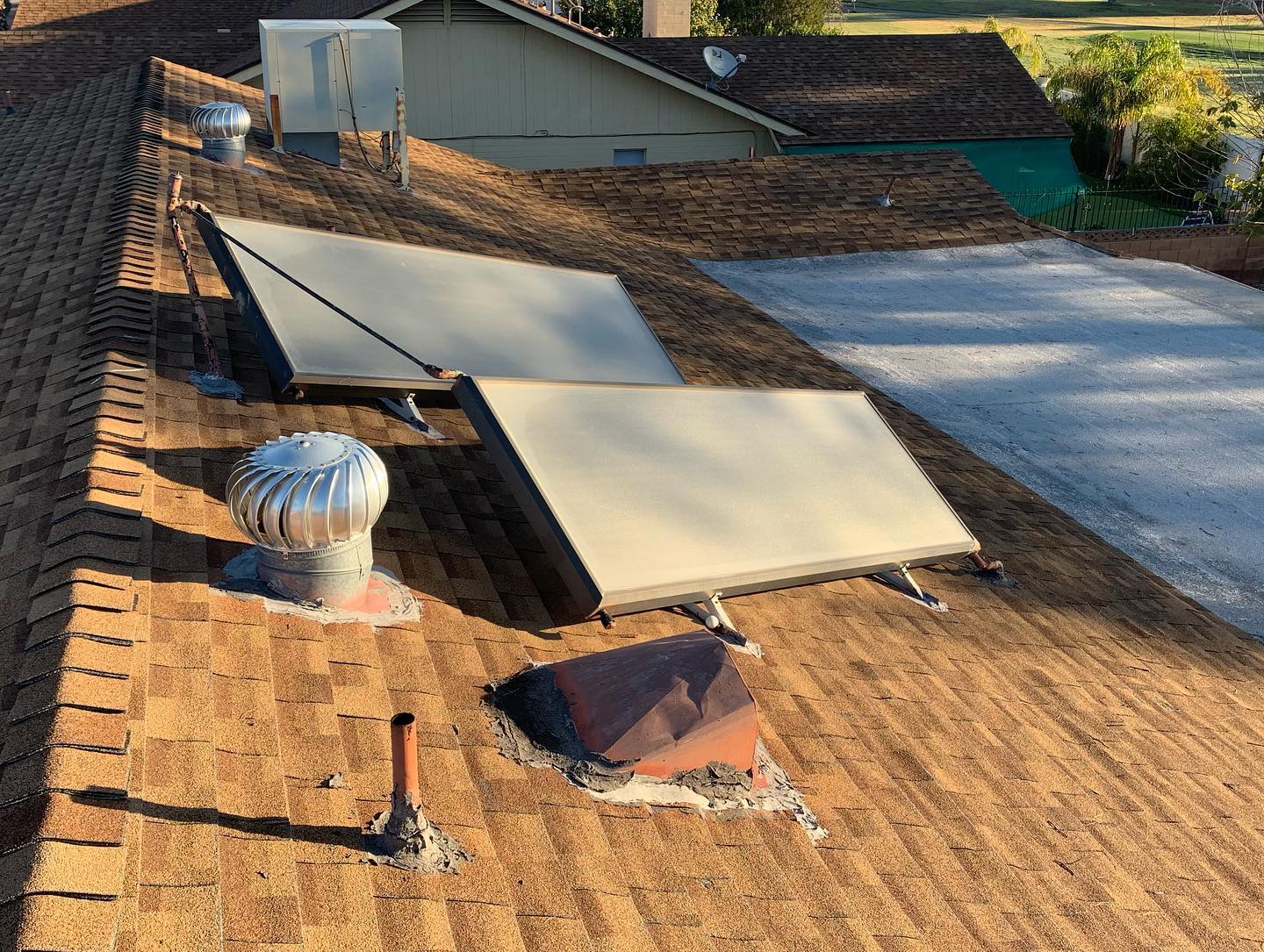
The gallery comes from our own job sites around the Valley. It covers the kinds of work we do most often, at different stages of a project.
- Tile roofs: concrete and clay tile, the most common roof on Valley homes.
- Underlayment work: tile lifted off so worn underlayment can be replaced, then tiles reset.
- Repairs: broken or slipped tiles, flashing and leak repairs.
- Re-roofs: full roof replacements from tear-off to finished roof.
- Other roof types: shingle, foam, coated and flat roofs on homes and commercial buildings.
Why tile underlayment shows up so often
On a tile roof, the tile itself sheds most of the water and shields the layer below from the sun. The underlayment underneath is what actually keeps water out of the home. In Arizona heat, that underlayment dries out, becomes brittle and cracks over time, even while the tiles still look fine from the street.
That's why many tile projects involve lifting the tile, installing new underlayment and resetting the sound tiles. Photos of this work show what's hidden beneath a tile roof. Learn more on our tile roofs page.
Using photos to understand your own roof
Project photos can help you put a name to what you're seeing on your own home. Compare the roof type and condition in the gallery with your roof, viewed safely from the ground or with binoculars. Please don't climb onto your roof to check.
- Identify your roof type: tile, shingle, foam, coated or flat.
- Notice how a finished roof's lines look: straight rows, even edges and tight ridges.
- See what's normally hidden, such as underlayment and flashing, so a contractor's explanation makes sense.
- Get a sense of what a repair involves compared with a full re-roof.
Warning signs to look for on your roof
Some roof problems are visible from the ground. If you notice any of the following, it may be time for a roof inspection.
- Cracked, broken or slipped tiles, especially after monsoon winds.
- Missing, curled or lifted shingles.
- Exposed underlayment where tiles have shifted.
- Blisters, cracks or bare spots on foam and coated roofs.
- Standing water on a flat roof a day or more after rain.
- Debris built up in valleys and around roof penetrations.
- Water stains on ceilings or walls inside the home.
Every roof is different
A photo shows one roof on one day. Your roof's age, materials, pitch and history all affect what it needs. The only way to know for sure is an in-person inspection, where we photograph what we find on your roof and walk you through it.
To schedule an estimate, call 602-548-3770, Monday to Friday, 7 am to 5 pm. If we don't answer, leave a message and we'll return your call within 24 hours. You can also watch our crew at work on the media page.


Frequently asked questions
Still have a question? Call the office at 602-548-3770, Monday to Friday, 7 am to 5 pm.
Are these photos of real Integrity Roofing projects?
Yes. The gallery shows work completed by our crews on homes and buildings across the Phoenix Valley.
What types of roofs are shown?
Mostly tile roofs, plus shingle, foam, coated and flat roofs, including repairs, underlayment replacement and full re-roofs.
What is tile underlayment?
It's the waterproof layer beneath roof tiles. The tiles protect it from sun and shed most water, but the underlayment is what keeps water out of the home.
Why would tiles be removed if they aren't broken?
When the underlayment under the tile wears out, the tiles are lifted so new underlayment can be installed. Sound tiles are then reset on the roof.
What does a finished re-roof usually look like?
Rows should be straight and even, edges and ridges should be tight and neat, and there should be no debris left behind on the roof or around the home.
How can I tell what kind of roof I have?
Look from the ground. Tile has curved or flat rows of heavy pieces, shingles are flat overlapping strips, and foam or coated roofs are usually smooth, seamless surfaces on low-slope roofs.
Can photos tell me if my roof needs replacing?
They can help you recognize warning signs, but not diagnose your roof. An in-person inspection is the only reliable way to know.
Should I go on my roof to compare it with these photos?
No. Stay on the ground and use binoculars or look from a window. Walking on a roof is risky and can crack tiles.
Will you photograph my roof during an estimate?
Yes. We photograph what we find during the inspection so you can see the conditions yourself.
Do you have videos as well?
Yes. Our media page has job-site videos and short tips from our team.
Do you work on homes outside Gilbert?
Yes. The projects shown come from across our service area, which includes Gilbert, Mesa, Chandler, Queen Creek, San Tan Valley, Tempe, Phoenix, Scottsdale, Apache Junction, Ahwatukee, Glendale and Peoria.
How do I get an estimate for work like this?
Call 602-548-3770, Monday to Friday, 7 am to 5 pm. If we don't answer, leave a message and we'll return your call within 24 hours.
Let's take a look at your roof.
Call the office at 602-548-3770 to schedule an estimate, Monday to Friday, 7 am to 5 pm. If we don't answer, leave a message and we'll return your call within 24 hours.