Silicone coating over spray foam: when it's the right top coat
The coating is the part of a foam roof that faces the weather every day, so choosing it is one of the biggest decisions in the whole system. Here's how silicone stacks up against acrylic and polyurethane, and when we'd pick something else.
Last updated
The short answer
On Arizona flat roofs, white silicone is often the best top coat for spray foam: it resists UV, usually copes well with standing water and reflects heat when clean. The trade-offs are that it collects dirt, some products are soft, and later recoats generally have to be silicone as well. Whether it suits your roof comes down to drainage, how much the roof is walked on and what coating is up there now.
Why silicone is our usual pick on Valley foam roofs
Spray foam is the insulating body of the roof, and the coating over it is the weathering surface. That surface takes direct sun, monsoon rain, dust, heat and foot traffic, and its first job is to keep UV off the foam. Of the coatings commonly used over foam, white silicone is the one we recommend most often in the Valley.
The reasons line up neatly with our climate:
- It holds up where water sits. Even a well-drained flat roof may hold some water after a hard storm, and silicone generally handles that better than other common coatings.
- It shrugs off UV and weather. Silicone breaks down slowly under intense sun, which Valley roofs get most of the year.
- It stays flexible at both extremes. It keeps moving with the roof through scorching afternoons and cool nights.
- It reflects heat. Clean and white, silicone throws much of the sun's energy back off the roof.
- It's an established choice for foam. Silicone is a well-recognized protective coating for SPF systems.
That's the case for it. The rest of this page covers the other options and the situations where silicone is the wrong call.
Silicone, acrylic and polyurethane in more depth
Each of these coating families includes many products from many manufacturers, and the specific formulation matters as much as the family. Treat what follows as general guidance.
Silicone: the ponding-tolerant workhorse
Silicone's strengths are UV resistance, generally excellent tolerance of ponding water and excellent reflectivity when it's new and white. It cleans up with solvents rather than water. Its weaknesses are that it tends to collect dirt, that abrasion resistance varies and some products are fairly soft, and that recoating it later requires compatible preparation and materials, often silicone over silicone. It's a good fit for exposed roofs, especially where ponding is a concern.
Acrylic: water-based and budget-friendly
Acrylic coatings are water-based, so tools and spills clean up with water, and they offer generally good UV resistance and excellent reflectivity when new and white. Their main limitation is water that sits: under prolonged ponding, many acrylics soften and wear faster. They make the most sense on roofs with good drainage where budget is a priority, and they're widely used on foam roofs that shed water well.
Polyurethane: built for abuse
There are two main polyurethane types, aliphatic and aromatic, and the specific formulation drives how any one product behaves. Certain formulations stand up to scuffing and abrasion exceptionally well, which makes them useful on roofs that need extra durability or get walked on regularly. On some systems they appear as a base coat or in traffic areas, with a different top coat elsewhere.
Ponding: tolerance is not a drainage plan
Ponding is water still standing on the roof a day or two after the rain stops. During monsoon season it's one of the fastest ways to wear out a coating: the water holds dirt against the surface, keeps the coating wet for days and adds weight to the structure.
Silicone's tolerance for standing water is a real advantage, and it's one of the main reasons we use it on flat roofs that can't be made to drain perfectly. But tolerating ponding isn't the same as solving it. Water that keeps returning to the same low spot is still a sign of a drainage problem, and it still finds any weakness at a seam, curb or flashing.
Where we can, we fix the cause. On a foam roof that might mean adding foam to build slope toward a drain or scupper, opening up a clogged drain or scupper after a dust storm, or building a small cricket behind equipment that traps water. Also check any warranty for a ponding exclusion before counting on a coating to handle standing water by itself.
Dust, dirt pickup and how bright the roof stays
On the day it's applied, a white silicone roof is about as reflective as a roof gets. That brightness is what keeps the surface cooler and cuts the heat moving into the building. Silicone has a habit of holding onto dust, though, and Valley roofs collect plenty of it, especially after a haboob rolls through.
A dusty, darker surface bounces back less sunlight and soaks up more heat. Here's what that means in practice:
- Expect some loss of brightness over the first few years as dust works into the surface.
- Cleaning can bring back some reflectivity, but only use methods the coating manufacturer approves, and leave the roof work to professionals.
- Dark streaks or rings usually mark where water ponds and leaves dirt behind as it dries.
- A dirty surface also has to be thoroughly cleaned before any recoat, or the new coating won't bond.
- Real-world energy gains hinge on the product's reflectance and emittance ratings, its cleanliness and the insulation beneath.
Recoating a silicone roof: what will and won't stick
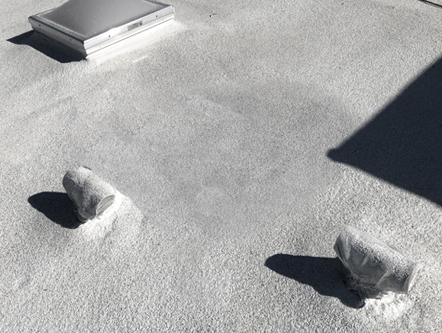
This is the part of choosing silicone that people most often wish they'd known sooner. Silicone is very hard for other materials to bond to. After silicone goes on a roof, the next coat is generally silicone as well, applied after careful cleaning and whatever preparation the manufacturer specifies. Some systems call for a primer or an adhesion test first.
That has practical effects down the road:
- Know what's on the roof. Before any recoat, the existing coating has to be identified, because the wrong product over it can peel.
- The direction matters. Silicone can often be applied over a well-prepared acrylic surface, but putting most other coatings over silicone is a different story.
- Repairs follow the same rule. Sealants, patching compounds and fabric used on a silicone roof must be compatible with silicone.
- Records save trouble. Writing down the product, the color and the date of each coating makes the next recoat far simpler.
Thickness and prep: where coatings succeed or fail
Two coatings from the same bucket can perform very differently depending on what's underneath and how much goes on. These are the factors that decide it.
Getting the surface ready
The surface has to be clean, dry and sound. On a recoat, dust, loose coating and contaminants come off first. Blisters, punctures, damaged foam and failed flashing get fixed, and wet foam is removed and refilled. Primer is used where the product or surface calls for it.
Building enough mils
Each coating system calls for a set thickness in mils. That build is what gives the product its UV protection and its designed service life. A coat stretched thin to cover more area wears through early. We follow the manufacturer's thickness requirement, often building it up over multiple passes, and measure along the way. In traffic areas, granules may be scattered into the wet coating for extra wear resistance.
Waiting for the right weather
Coatings need dry surfaces and suitable temperatures to cure. We plan around monsoon storms, June 15–September 30, and watch for heavy dew on cool nights, which can affect curing.
When we'd steer you away from silicone
Silicone is our frequent choice, not our only one. We'll recommend something else, or more than a coating, when:
- The roof sees heavy foot traffic. A tougher polyurethane, or silicone with well-placed walkway pads, may serve better.
- Water runs off quickly and the budget is tight. A quality acrylic is a reasonable option where water doesn't sit.
- The existing coating rules it out, or keeping future recoat options open matters to you.
- The roof is exposed to specific chemicals, such as kitchen exhaust or process equipment, that call for a product chosen for that exposure.
- The underlying issue is the structure or the drainage. A coating can't correct a sagging deck, soaked insulation or a roof built to hold water.
- The roof is too far gone. Saturated foam or a damaged deck has to be repaired or replaced before any coating goes on.
Whichever coating you choose, the workmanship matters more than the brand on the pail. Prep, mil thickness, dry conditions and penetration details are what decide how it holds up.
Talk with us about the coating on your roof
We start with a paid inspection that identifies the existing coating, checks thickness, foam condition, moisture and drainage, and then we walk you through which coating suits your roof and the reasoning behind it. You'll get a written estimate, and financing is available. Call 602-548-3770 between 7 am and 5 pm, Monday to Friday, or email office.integrityroofing@gmail.com. If we don't answer, leave a message and we'll return your call within 24 hours.
Everything else about foam is on our spray foam roofing page, and cost factors are in the Roofing Cost Guide.
Which coating we'd lean toward
A starting point for discussion. The inspection, the existing coating and the manufacturer's requirements decide the final choice.
| What we find on your roof | Coating we'd usually lean toward | Why |
|---|---|---|
| Low spots that hold water after storms | Silicone | Usually holds up to standing water much better than acrylic |
| Good drainage and a tight budget | Acrylic | Water-based and reflective; well suited where water runs off quickly |
| Regular foot traffic to equipment | Polyurethane, or silicone with walkway pads | Some polyurethanes are very tough; walkways protect softer coatings |
| An existing silicone coating | Silicone | Few materials bond to silicone, so recoats generally stay silicone |
| An existing acrylic coating | Silicone or acrylic, after prep | A properly prepared acrylic surface will often accept silicone; follow the manufacturer's requirements |
| A coating nobody can identify | Identify it first | Compatibility has to be confirmed before choosing any recoat |
| Exhaust or equipment residue | A product chosen for that exposure | Chemical resistance varies widely between products |
Frequently asked questions
Still have a question? Call the office at 602-548-3770, Monday to Friday, 7 am to 5 pm.
Why do roofers recommend white silicone so often in Arizona?
White silicone resists UV, usually copes with the water that collects on flat roofs after monsoon storms and, when clean, reflects much of the sun's heat. It also stays flexible through big daily temperature swings. Those strengths match the Valley's climate closely.
If my foam roof has acrylic now, can the next coat be silicone?
Often, yes. Silicone can usually be applied over an acrylic surface that has been cleaned, repaired and prepared the way the manufacturer specifies, sometimes with a primer. Going from silicone back to acrylic is much harder, so it's worth deciding with the long term in mind.
How can you tell what coating is already on my roof?
Records from the last coating job are the easiest answer. Without them, a roofer looks at the surface and may do a small adhesion test with the planned product to confirm compatibility before committing to a recoat.
Does silicone lose its reflectivity over time?
Some, yes. Silicone tends to hold dust, and the dirt dulls the surface so it reflects less heat than when it was new. Manufacturer-approved cleaning can restore part of it, and a clean surface is required before a recoat anyway.
Is silicone harder to repair than acrylic?
Repairs on silicone are very doable, but they require silicone-compatible materials and a clean surface, since most other sealants won't bond to it. Acrylic is more forgiving about what goes over it. Either way, the repair has to reach sound foam to last.
Is acrylic ever the smarter choice over foam?
Yes. On a foam roof that drains well, with little or no ponding, a quality acrylic is a reflective, water-based option that often fits a tighter budget. It also keeps future recoat choices more open than silicone does.
What is the difference between aliphatic and aromatic polyurethane coatings?
Aliphatic polyurethanes are formulated to hold up in sunlight and keep their color, so they can serve as a top coat. Aromatic types are generally less stable in sunlight, so they commonly serve as a base layer beneath a different top coat. Exact performance depends on the product.
How many coats of silicone go on a foam roof?
It depends on the system and the thickness the manufacturer specifies. On many roofs it's built up over several passes so the full thickness is reached evenly. What matters is the finished thickness, not the number of passes.
Why do crews check coating thickness during application?
Thickness is what gives a coating its protection and service life, and it's easy to spread a coat too thin over a large roof. Checking as the work goes lets the crew add coating where it's light before it cures, instead of finding thin spots years later.
Let's take a look at your roof.
Call the office at 602-548-3770 to schedule an estimate, Monday to Friday, 7 am to 5 pm. If we don't answer, leave a message and we'll return your call within 24 hours.