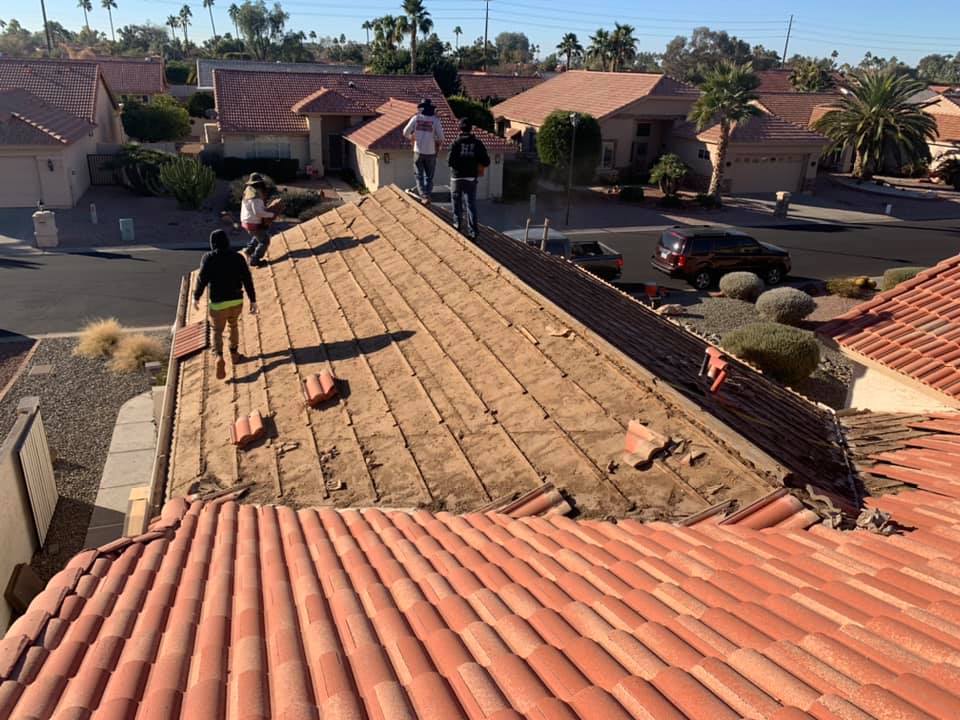

Winter rain often reveals roof leaks that monsoon storms never did because it falls differently. Monsoon rain comes in short, heavy bursts that run off quickly, while winter storms can soak a roof slowly for hours or even days, and cooler weather keeps everything wet longer. That steady soaking finds small openings in underlayment, flashing and valleys that a fast summer downpour simply ran past.
Monsoon rain and winter rain test a roof in different ways
East Valley homeowners tend to think of monsoon season, June 15 to September 30, as the real test for a roof. It is a hard test, but it is a specific one. Monsoon storms bring strong wind, blowing dust and intense rain that usually passes within an hour or so. Then the sun returns and any water under the tile dries quickly.
Winter storms work on a roof differently:
- Longer rain events. A winter system can bring light to moderate rain for many hours, sometimes across several days in a row. Water has time to work its way into every lap and seam.
- Slower drying. With cooler temperatures, cloud cover and shorter days, a damp roof deck and wet underlayment can stay wet well after the rain stops.
A monsoon storm tests how fast your roof sheds water. A winter storm tests how watertight it is over time. A roof can pass the first and fail the second.
What summer did to your roof before the first winter storm
Many winter leaks actually start in summer. The damage just was not visible until the right kind of rain arrived.
Heat-worn underlayment
On a tile roof, the tile sheds most of the water, but the underlayment beneath it is what keeps water out of the attic. Months of summer heat slowly dry out traditional felt, and once it becomes brittle it can crack along nail lines and laps. During a quick monsoon burst, little water reaches those cracks. During a long winter rain, water that runs under the tile has hours to find them. Our tile roof underlayment guide explains how this layer ages.
Wind-shifted or cracked tiles
Monsoon wind can lift, slide or crack tiles and blow debris across the roof. A single slipped tile exposes the underlayment below it to sun and rain.
Dried-out sealant and flashing
Sealant around vents, skylights, chimneys and wall flashing takes a beating from summer sun. As temperatures drop in winter, roofing materials contract, and small gaps around flashing can open a little wider. Those gaps are easy for steady rain to find.
Debris left behind in valleys and gutters
Dust, leaves and storm debris tend to collect in roof valleys, behind chimneys and in gutters and scuppers. When a valley is partly blocked, water backs up and spreads sideways under the tile instead of running straight down. Valleys are already one of the most common leak areas on a tile roof, and a clog makes it more likely during a long rain.
Flat and low-slope roofs need extra attention in winter
If your home has a flat roof section, a patio cover or a foam roof, winter rain can be harder on it than summer storms. Water that ponds on a low-slope roof evaporates quickly in July. In winter, the same puddle can sit for days. Standing water puts pressure on seams, coatings and any small crack, and blocked scuppers or drains make ponding worse. Our flat roofing and foam roofing pages describe how these roofs are maintained.
Signs your roof is leaking in winter
Winter leaks are often slow, so the clues can be subtle. Watch for:
- New or growing water stains on ceilings, especially near exterior walls, around light fixtures or under roof valleys
- Bubbling or peeling paint on ceilings or upper walls
- A musty smell in a room or closet after a few days of rain
- Damp insulation or water marks on the underside of the roof deck if you can safely look into the attic
- Water overflowing gutters or scuppers instead of draining through them
Where a stain appears is not always where the water got in. Water can travel along the underlayment or a rafter before it drips, which is why tracing a leak usually takes someone looking at the roof itself.
What to do if you find a leak
- Protect the inside of your home. Move belongings, set out a bucket and towels, and keep the area dry.
- Take photos. Photograph the stain and any visible damage. If you have homeowners insurance questions, our guide to storm damage and insurance claims covers what to document.
- Look from the ground or the attic only. From the yard, binoculars can help you spot slipped or broken tiles. In the attic, look for wet wood or insulation if you can do it safely. Please do not climb onto a tile roof, and never go up on a wet roof. Tiles break underfoot and wet roofs are slippery. Our safe DIY roof checks list what you can check without getting on the roof.
- Call a licensed roofer. A roofer can trace the leak to its source and tell you whether it is a single spot or part of a larger issue like aging underlayment. Learn more about our roof repairs and maintenance.
How to get ahead of the next winter storm
The best time to find a winter leak is before the rain does. A few steps help:
- Schedule an inspection after monsoon season. A roof inspection in fall or early winter can catch slipped tiles, worn flashing and debris-filled valleys left behind by summer storms.
- Keep gutters, scuppers and downspouts clear so water moves off the roof instead of backing up.
- Know your underlayment's age. If your tile roof is 20 years old or more and has never had its underlayment replaced, plan ahead rather than waiting for a ceiling stain.
- Budget for repairs early. Our roofing cost guide explains what affects the cost of repairs, underlayment replacement and new roofs.
Questions homeowners ask
My roof made it through monsoon season. Why is it leaking now?
Monsoon rain is heavy but short, and the roof dries fast in the heat. Winter rain is usually slower and longer, and the roof stays wet. That gives water time to find small cracks in underlayment, gaps at flashing or a partly blocked valley that a summer storm passed over.
Is a small winter leak worth fixing right away?
Yes. A slow leak can wet the roof deck and insulation for a long time before a large stain appears. Fixing it early helps keep a small repair from turning into damaged decking or drywall.
Can a roof be repaired in winter?
Yes. The East Valley's mild winters are a good time for roof work. Repairs are scheduled around rain so the roof can be opened and closed up in dry weather.
Does a winter leak mean I need a new roof?
Not necessarily. Many leaks come from one slipped tile, a worn piece of flashing or a clogged valley. If the underlayment is failing across the roof, a tile lift and relay or a replacement may make more sense. Our FAQ covers more on repair versus replacement.
Integrity Roofing has been family owned since 1993 and works on homes across Gilbert, Mesa, Chandler and the rest of the East Valley (Arizona ROC #096629). If winter rain has turned up a stain or a drip, or you want your roof checked before the next storm, call us at 602-548-3770, Monday to Friday, 7 am to 5 pm. If we don't answer, leave a message and we'll return your call within 24 hours.