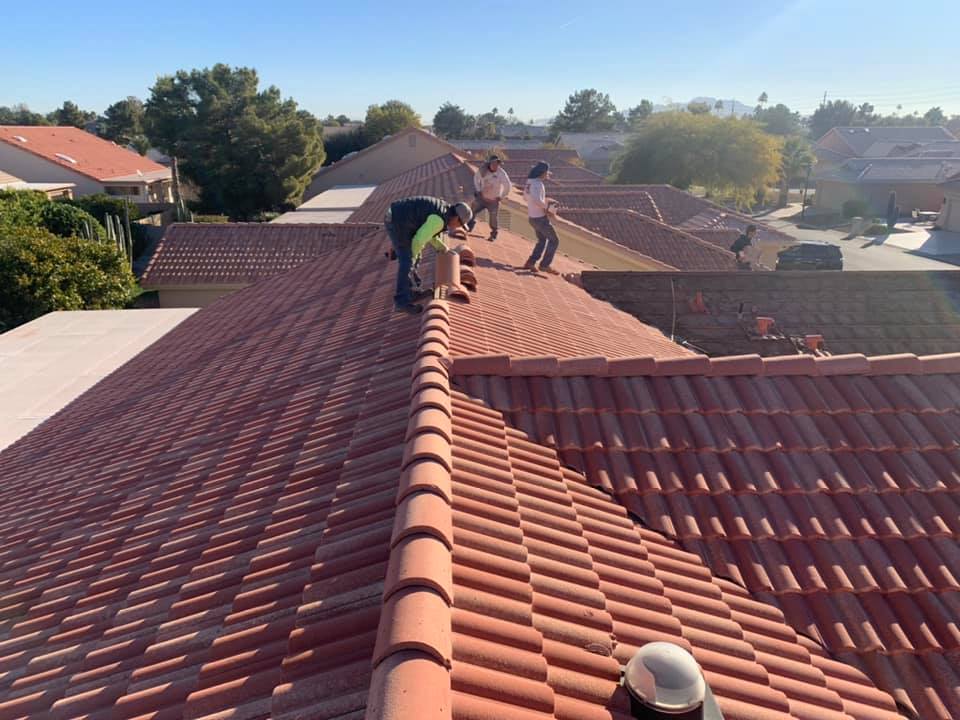

On a tile roof, the valleys are where leaks show up most often. A valley is the channel where two roof slopes meet, and it collects water from both of them, so any debris, slipped tile or worn underlayment in that channel gets tested harder than anywhere else on the roof. If you have a ceiling stain near an inside corner of your home, the valley above it is usually the first place a roofer looks.
What a roof valley is
Stand in your yard and look for the spots where two sections of roof come together to form an inward-facing "V." Homes in Gilbert, Mesa and Chandler often have several, especially where a garage or second wing joins the main roof. Each of those lines is a valley.
On most East Valley tile roofs, a valley is built in layers:
- Underlayment. The waterproof layer on the roof deck runs through the valley, usually with extra material, because this is where it does the most work. Our tile roof underlayment guide explains how that layer works.
- Valley metal. A metal channel, sometimes called a valley pan, sits on top of the underlayment and carries water down to the eave. It usually has raised edges or ribs to keep water from spilling sideways.
- Cut tile. The tiles on each side are cut at an angle to follow the line of the valley. They overlap the edges of the metal but leave an open channel down the middle so water can flow freely.
Problems start when one of those layers is compromised or the channel gets blocked.
Why valleys leak more than the rest of the roof
They carry the most water
Every drop that lands on the two slopes feeding a valley ends up funneling through it. During a heavy rain the valley runs like a small gutter. A weakness that would never show up on an open field of tile can let water through quickly in a valley.
Debris collects there
Leaves, palm fronds, seed pods, wind-blown dust and bird nesting material all tend to slide down the slopes and settle in the valley. Once debris builds up, it acts like a dam. Water backs up behind it, rides over the edges of the valley metal and runs onto the underlayment beneath the cut tiles. If that underlayment is aging, that is often where the leak starts. This is one reason valleys deserve attention before winter storms arrive.
Cut tiles can slip or crack
The angled tiles along a valley are often held in place differently from full tiles, and smaller pieces can shift over time. A cut tile that slides into the channel narrows it and traps debris. A cracked tile beside the valley lets water reach the underlayment directly. Foot traffic from other trades can also crack tiles along valleys.
The underlayment underneath wears out
Arizona heat is hard on underlayment, and the valley is where water reaches it most often. When a roof is nearing the end of its underlayment life, valleys are commonly among the first areas to show it. Our post on how long tile underlayment lasts in Arizona covers the warning signs.
Signs your valleys may need attention
You can check for most of these from the ground or from inside the house. Please don't climb onto a tile roof to look; tiles crack easily underfoot and sloped tile is slippery. Our safe DIY roof checks guide covers what you can look at without going up.
- Leaves, fronds or other debris visibly piled in the valley when you look up with binoculars
- Tiles along the valley that look out of line, broken or missing
- Water stains or bubbling paint on ceilings near inside corners of rooms, or where two rooflines meet
- Stains that appear or grow after a long, steady rain rather than a quick shower
- Water spilling over the side of the valley during a storm instead of flowing down the channel
Winter is when many of these show up. The East Valley's winter storms tend to bring slower, longer rains than the quick monsoon bursts of summer, which gives water more time to find a weak spot. Our post on why winter rain finds roof leaks goes into that in more detail.
How valley leaks are repaired
The right fix depends on what a roofer finds once the area is opened up. As part of repairs and maintenance, a typical valley repair looks like this:
- Inspect the valley and the ceiling below. Water can travel along the deck before it drips, so the stain inside doesn't always sit directly under the leak. A roof inspection traces the source.
- Clear the channel. Debris is removed so the valley can drain as designed.
- Lift the tile along the valley. The cut tiles on both sides are carefully removed and set aside for reuse wherever they are still sound.
- Replace worn underlayment and valley metal. If the underlayment in the valley is brittle or torn, or the metal is damaged or undersized, those are replaced while the tile is off.
- Reset the tile. Tiles are reinstalled and secured with a clear channel down the middle, and cracked pieces are replaced with matching tile where possible.
If several valleys are showing wear, or the underlayment across the roof is near the end of its life, a full tile lift and relay may make more sense than repairing valleys one at a time. For what drives the cost of either option, see our roofing cost guide.
Simple ways to protect your valleys
- Trim overhanging trees. Less leaf drop means less debris in the valleys and gutters.
- Close open eaves. On S-tile and barrel tile, bird stop helps keep nesting material from building up at the edges.
- Schedule a check before the rainy months. Having valleys cleared and looked over before winter storms is far easier than chasing a leak afterward.
Questions homeowners ask
Can I clean my roof valleys myself?
We don't recommend walking on a tile roof to clear valleys. It is easy to crack tiles and easy to fall. If you can see debris piling up, a roofer can clear it and check the tile and metal at the same time.
Why does my ceiling leak only in some storms?
Valley leaks often depend on how much water is moving and how much debris is in the channel. A short storm may drain fine, while a long, soaking rain backs water up over the edge of the valley metal.
Is a valley leak a sign I need a new roof?
Not necessarily. Many valley leaks are fixed by clearing debris, resetting tile or replacing the underlayment and metal in that one area. If the underlayment is failing across the whole roof, though, a broader repair or re-roof may be the better long-term choice. Our repair vs. replacement guide can help you weigh it.
Do you check valleys during an inspection?
Yes. Valleys, flashing, cracked or slipped tiles, eaves and signs of underlayment wear are all part of a roof inspection.
Integrity Roofing has been family owned since 1993 and serves homeowners in Gilbert, Mesa, Chandler and across the East Valley (Arizona ROC #096629). If you have a stain near an inside corner or want your valleys checked before winter storms, call us at 602-548-3770, Monday to Friday, 7 am to 5 pm. If we don't answer, leave a message and we'll return your call within 24 hours.