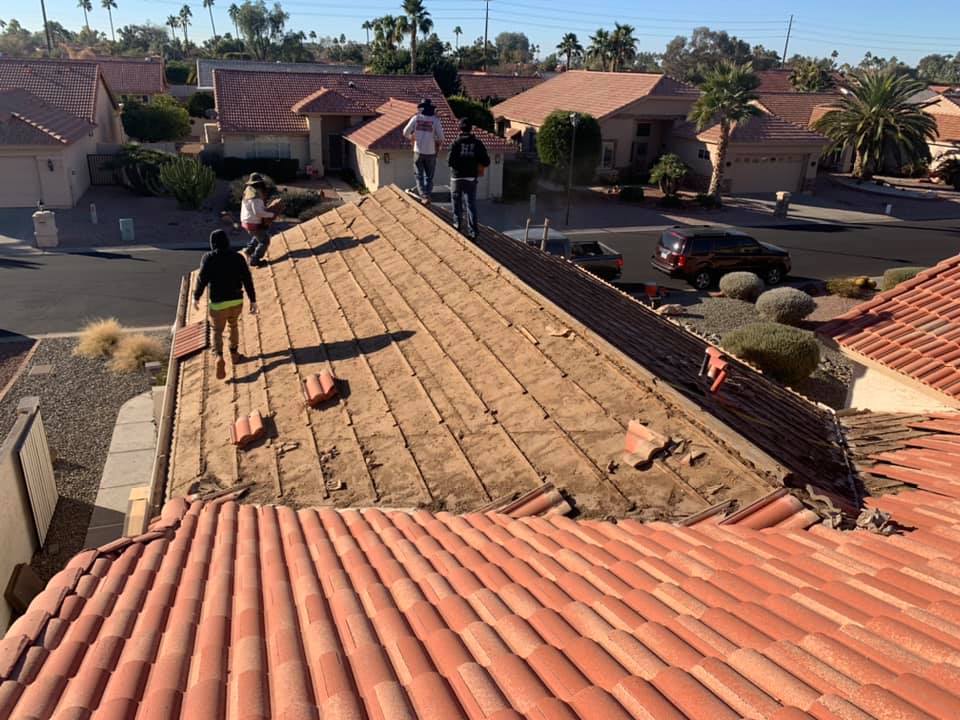
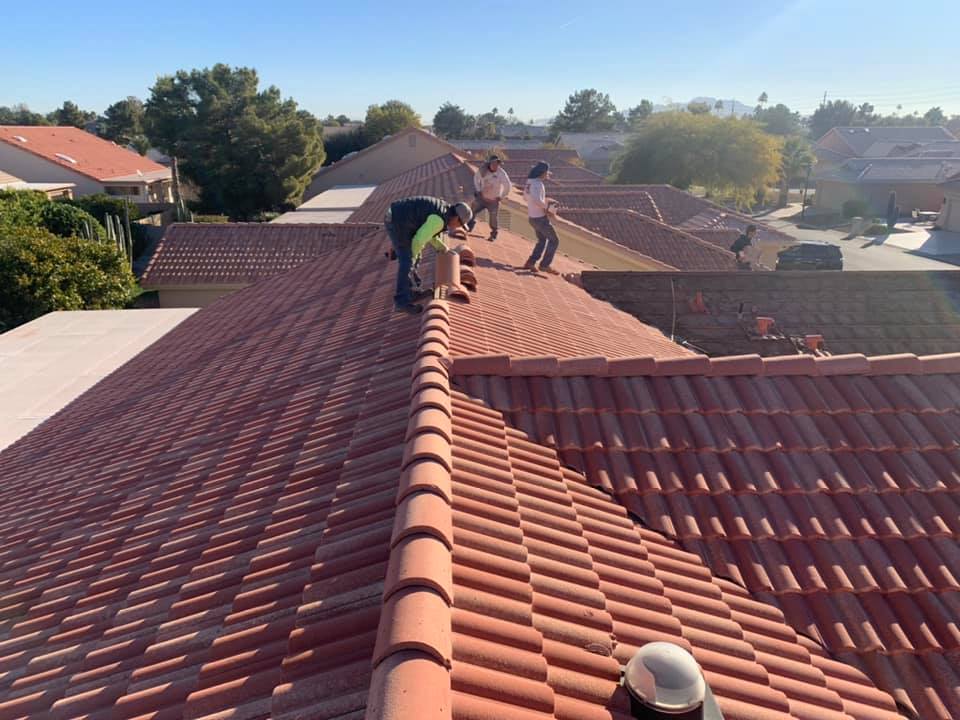
Most tile roofs in Gilbert, Mesa and Chandler are concrete tile, but clay tile shows up too, especially on custom homes and older Spanish and Mission-style designs. The quickest ways to tell them apart are the color inside a chipped or broken piece, the thickness and texture of the tile edges, and the spare tiles or paperwork your builder may have left behind. You can check all of these from the ground, the garage or your home records, without stepping on the roof.
Why it matters which tile you have
From the street, clay and concrete tile can look almost identical. Both come in S-shaped, barrel and flat profiles, and both can last for decades in the Arizona sun. But the material makes a real difference when your roof needs work:
- Matching replacements. A cracked tile has to be replaced with the same material, profile and color. Mixing clay and concrete on the same roof plane usually looks patchy, and the two often don't interlock the same way.
- Repair planning. Clay tile tends to be more brittle and can be harder to source in older profiles and colors. Knowing what you have helps a roofer plan for salvaging, matching or blending tiles before work starts.
- Weight. Concrete tile is generally heavier than clay. That matters if you are adding solar, changing roof materials, or comparing options for a future re-roof.
- How it ages. Concrete tile color can fade or wear over time, especially on sun-facing slopes. Fired clay usually holds its color longer. A faded roof is not automatically a failing roof, but it is useful to know why it looks the way it does.
- Budgeting. Material affects the cost of repairs, tile lift and relays, and replacement. Our roofing cost guide explains what drives those costs.
Either way, the tile is only part of the system. Underneath every tile roof is the underlayment that actually keeps water out, and it ages on its own schedule regardless of which tile sits on top. Our tile roof underlayment guide covers that layer in detail.
Five ways to tell clay tile from concrete tile
None of these checks require climbing onto the roof. Tile can crack under foot traffic, and a tile roof is easy to slip on, so leave the rooftop to a professional.
1. Look for leftover tiles at home
Builders and roofers often leave a stack of spare tiles in the garage, a side yard or the attic. These are the best evidence you have. Pick one up and look at it closely. Many tiles have a manufacturer name, stamp or product code molded or printed on the underside, and that can tell a roofer exactly what was installed and whether it is still made.
2. Check the color inside a broken edge
If you have a spare tile with a chipped corner, or a broken piece that fell into a gutter or flower bed, look at the inside:
- Clay is fired earth. The inside is usually the same reddish, orange or tan color all the way through, with a fine, dense texture.
- Concrete is cement mixed with sand. The inside usually looks gray and slightly gritty, even when the top surface is red, brown or terracotta colored.
This is often the single clearest sign. A terracotta-colored tile with a gray core is concrete.
3. Compare thickness and edges
Concrete tiles are typically thicker and have blunter, squarer edges. Clay tiles tend to be thinner, with crisper edges and a more refined shape. From the ground, look at the bottom row of tile along the eaves. Thick, chunky leading edges point toward concrete. Thinner, more delicate edges point toward clay.
4. Notice the surface and how it has weathered
Concrete tile surfaces often feel slightly rough or sandy, and as the surface color wears, patches of gray can start to show through on the most sun-exposed slopes. Clay tile is often smoother, and some clay tile has a glazed, slightly glossy finish. Clay can show natural color variation from tile to tile that looks intentional rather than faded.
5. Look at the roof style and your records
Two-piece barrel tile, where curved caps sit over curved pans in a classic Mission look, is a traditional clay style, though concrete versions exist. Flat and S-profile tiles are common in both materials. For a firmer answer, check your closing documents, original builder paperwork, past roofing invoices or your HOA's architectural records. HOAs often keep approved roof material lists, and our HOA roof approval guide explains how those records work.
What to do with the answer
- Write it down. Keep a note with your home records: the material, the profile, the color name or manufacturer if you found one, and where the spare tiles are stored.
- Hang on to spare tiles. Even a handful of extras can make a future repair blend in much better, especially if your color or profile has been discontinued. Store them flat so they don't chip.
- Share it before any rooftop work. If solar installers, pest control, holiday decorators or other trades will be on your roof, it helps to know what you have and how many spare tiles you have on hand in case something cracks.
- Still not sure? Have it checked. During a roof inspection, a roofer can identify the tile, note cracked or slipped pieces and look at the condition of the flashing, valleys and underlayment.
A good winter project for East Valley homeowners
The cooler months are a comfortable time to dig through the garage for spare tiles and gather your roof paperwork. It is also a smart time to have any cracked or slipped tiles replaced before the next round of winter rain, and well ahead of monsoon season next summer. If you find broken pieces in your yard or gutters, that is worth a closer look. Our repairs and maintenance page explains how tile repairs are handled, and the tile roofs page covers clay and concrete tile in more depth.
Questions homeowners ask
Is clay tile better than concrete tile?
Neither is better for every home. Both hold up well in the East Valley heat when they are installed over sound underlayment and maintained. Clay usually holds its color longer, while concrete tile is widely available in many profiles and colors. The right choice depends on your home's structure, style, HOA rules and budget.
Can I replace a few broken clay tiles with concrete ones?
It is not a good idea on the same roof plane. The two materials differ in thickness, weight, color and how they lock together, so mixing them can look mismatched and may not lay flat. A roofer will try to find a matching tile or borrow tiles from a less visible area of your roof.
My concrete tile looks faded. Does it need to be replaced?
Not necessarily. Faded color on concrete tile is often cosmetic. What matters more is whether tiles are cracked or slipped and how old the underlayment is. An inspection can tell you whether the roof needs repairs, a tile lift and relay, or nothing at all right now.
Where can I learn the roofing terms a roofer might use?
Our roofing glossary explains common terms like underlayment, flashing and valleys, and the FAQ answers many common tile roof questions.
Integrity Roofing has been family owned since 1993 and serves homeowners in Gilbert, Mesa, Chandler and across the East Valley (Arizona ROC #096629). If you are not sure which tile is on your roof, or you have found broken pieces and want them replaced with a good match, call us at 602-548-3770, Monday to Friday, 7 am to 5 pm. If we don't answer, leave a message and we'll return your call within 24 hours.