
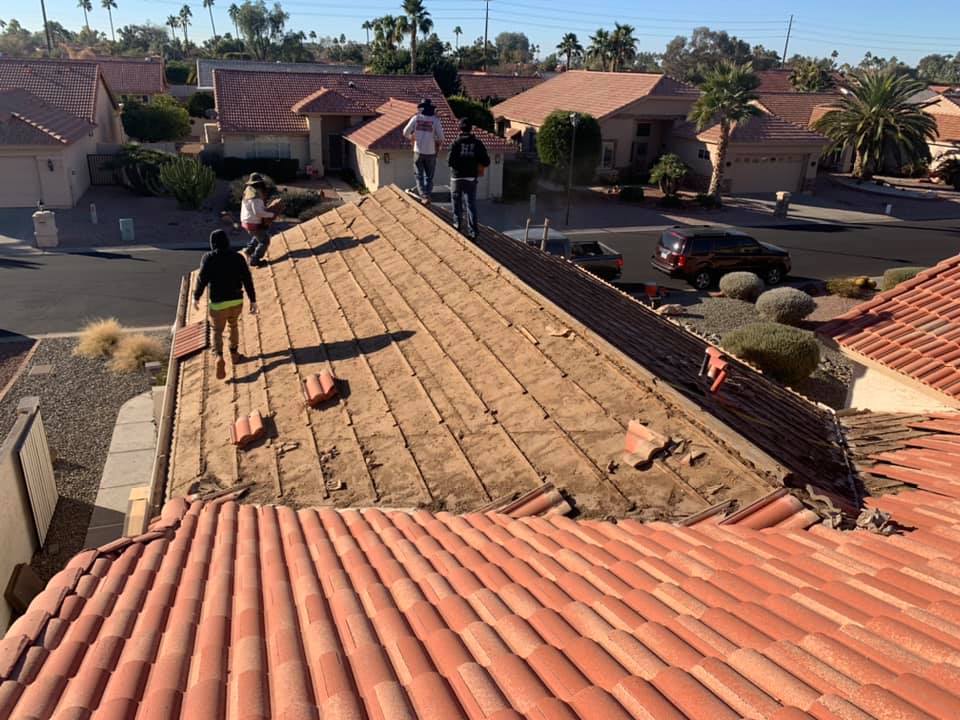
You can hang holiday lights on a tile roof without cracking tiles as long as you work from a ladder, keep the lights along the eave and fascia instead of up on the tile field, and use clips that hold without nails, screws or pressure on fragile tile edges. Most cracked tiles we find after the winter holidays come from someone stepping onto the roof to reach a ridge or peak. If a run of lights can't be hung from a ladder, leave it out of this year's display.
Why tile and holiday lights don't always mix
Concrete and clay tile handle Arizona sun and rain well, but they are brittle under point loads. A knee, a boot heel or a ladder rail resting on the wrong spot can crack a tile, and the crack often sits on the underside or under the overlap where you can't see it from the yard.
A cracked tile rarely leaks the next day. The real water barrier is the underlayment beneath the tile, which you can read about on our tile roofs page. The trouble is timing. Lights go up in November and December, and winter storms often arrive soon after. A tile that cracked while you were decorating leaves the underlayment exposed right when the Valley gets its steadiest rain of the year.
Plan the display from the ground first
Before you buy clips or unpack a single strand, walk around the house and decide where the lights will go.
- Stick to the eave line. The edge of the roof where the first row of tile meets the fascia is reachable from a ladder on most single-story East Valley homes.
- Skip ridges, hips and peaks. Outlining the top of the roof looks great in photos, but on tile it almost always means walking the roof. That is the line to give up.
- Find your outlets. Plan cord routes along the wall or ground to an outdoor GFCI outlet, not across the roof.
- Look for alternatives. Lit shrubs, pathway lights, patio cover beams and window outlines can carry a display without involving the tile at all.
Choosing clips that won't damage tile
The right clip depends on what's at the edge of your roof. Many tile homes in Gilbert, Mesa and Chandler have no gutters on some or all sides, so a plain gutter hook won't work everywhere.
Fascia clips and outdoor adhesive hooks
If your home has a wood or stucco fascia below the tile, this is usually the safest place for lights. Outdoor-rated adhesive hooks and clips that mount to the fascia keep all of the weight off the tile. Desert sun can soften some adhesives even in winter, so test one on a south- or west-facing wall a day before you hang the whole run.
Gutter clips
Where you do have gutters, clips that hook over the gutter lip hold lights well. Don't lean the ladder on the gutter while you work. Rest it against the wall or use a ladder standoff so the gutter doesn't dent or pull away from the fascia.
Tile edge clips
Some clips are made to slip over the bottom edge of the first row of tile. Use these only if you can place them from the ladder without standing on, kneeling on or leaning your weight onto any tile. Slide them on gently. If a clip needs force to seat, or you have to lift a tile to make it fit, stop and use a fascia clip instead.
What not to use
- Nails, screws and staples in tile, fascia or trim. Every hole is a path for water into wood that is hard to see and slow to dry.
- Anything wedged under a tile. Prying tiles up to tuck in a cord or clip can break the tile, shift it out of line, or pull it loose from its fastener.
- Wire ties wrapped around vent pipes, flashing or roof jacks. These parts seal the roof, and bending them can open a leak.
Ladder setup on a tile roof home
The ladder itself is one of the most common causes of cracked eave tiles. When a ladder leans directly on the tile edge, the rails press on the tile with your full weight behind them.
- Set the ladder on firm, level ground, not on loose gravel, wet grass or a sloped walkway.
- Lean it against the wall or fascia below the tile, never on the tile itself. A ladder standoff helps hold it off the roof edge.
- Keep your hips between the rails and move the ladder often rather than reaching sideways.
- Have a helper hold the base and pass up lights and clips so you aren't carrying a load up the ladder.
Two-story homes and tall entry areas are a different job. If a section can't be reached safely from a ladder on the ground, leave it unlit or hire someone with the right equipment, and ask them up front how they'll reach the roof without walking on the tile.
Electrical tips for desert rooftops
- Use lights and extension cords rated for outdoor use, and plug them into a GFCI-protected outlet.
- Run cords along the wall and ground, not under tiles or through gaps at the eave. A cord under tile can hold a tile up off its neighbors and let wind-driven rain in.
- A plug-in timer means you aren't climbing back up to fix a switch or check a connection.
Taking lights down in January
Removal is where many homeowners crack a tile they protected all season. A long tug on a strand drags clips across tile edges and can pop a tile out of place.
- Remove clips one at a time from the ladder, moving it as you go.
- Peel adhesive hooks slowly and use the release tab if there is one.
- Take lights down on a dry day. A tile that's been rained on is slicker and harder to handle.
When everything is put away, look along the eave from the ground and from the ladder. Check for cracked or slipped tiles, chipped edges, missing bird stop at the first row, and anything left behind. Our guide to safe DIY roof checks covers what you can look for without stepping on the roof.
Questions homeowners ask
Can I walk on my tile roof if I step only on the lower edge of each tile?
We don't recommend it. Keep the display to what you can reach from a ladder.
I think I cracked a tile. Does it need to be fixed right away?
A single cracked tile is usually a small repair, but it's best done before the next storm so the underlayment beneath isn't left exposed. Our repairs and maintenance team replaces broken tile and loose eave pieces.
How do I know if decorating caused a leak?
Look for new stains on ceilings near exterior walls after the first winter rain, or damp spots in the attic near the eaves. If you're not sure, a roof inspection is a paid service that shows exactly what's going on. You'll find more answers on our FAQ page.
Integrity Roofing is a family-owned Gilbert roofer serving the East Valley since 1993 (ROC #096629). If hanging or taking down your lights turned up a cracked tile or a loose eave, call us at 602-548-3770, Monday to Friday, 7 am to 5 pm. If we don't answer, leave a message and we'll return your call within 24 hours.


