
Bird stop is the closure piece installed along the bottom edge of a tile roof that fills the open curves under the first row of tiles. On S-shaped and barrel tile, those curves leave hollow openings at the eaves, and without bird stop they become ready-made nesting spots for pigeons and sparrows. A good bird stop keeps birds and debris out while still letting water that gets under the tile drain off the roof.
What bird stop actually is
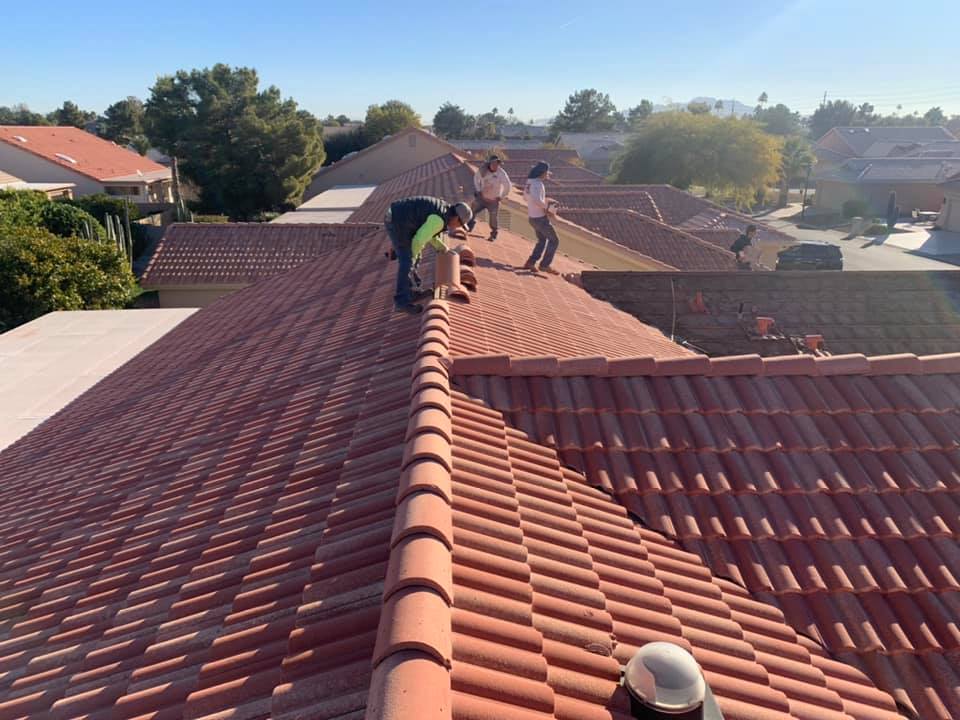
Look at the lowest row of tiles on a Spanish or Mission-style home in Gilbert, Mesa or Chandler and you will see that the tiles rise and fall in waves. Where each tile arches up, there is a gap between the tile and the roof deck underneath. Across every eave, that adds up to dozens of sheltered pockets just the right size for a bird.
Bird stop, also called an eave closure, is what closes those pockets. It is usually one of two things:
- A pre-formed closure strip. A rigid strip shaped to follow the profile of the tile. It is fastened along the eave before the first course of tile goes down, so each curve sits on a matching "tooth."
- A mortar closure. On some homes the openings at the eave are filled with mortar, sometimes called a mud-set eave. Done right, it includes small weep openings so water can still escape.
Flat tile profiles sit much closer to the deck and leave smaller gaps, so bird stop matters most on S-tile and barrel tile, which are common across the East Valley. If you are not sure what profile or tile material you have, our post on telling clay tile from concrete tile walks through what to look for from the ground.
Why Arizona tile roofs need it
Birds are not the only reason bird stop exists, but they are the most visible one. Here is what an open eave can lead to:
- Nesting material that blocks drainage. A tile roof is a two-layer system. The tile sheds most of the water, and the underlayment beneath it handles whatever gets past. That water needs a clear path down and out at the eave. Twigs, grass and debris packed under the bottom row can dam it up and hold moisture against the underlayment.
- Droppings and mess. Pigeon droppings build up on the underlayment and battens, stain stucco and patios below, and are unpleasant to clean.
- Displaced tiles. Birds working their way under the bottom course can nudge tiles out of position, and repeated nesting can push material farther up the roof.
- Wind-driven rain. The open eave is also an easy entry point for wind-blown rain and dust during storms. Bird stop helps keep the edge of the roof closed up.
Why bird stop goes missing or stops working
Even where bird stop was installed, it does not always stay in good shape. Common reasons include:
- It was never installed. Some roofs, especially older ones, simply went up without it, or only some eaves were closed.
- Mortar has cracked or fallen out. Years of heat and cooling can loosen mortar closures, leaving gaps birds can squeeze through.
- Tiles were disturbed. Work on the roof, such as gutter installs, satellite dishes, solar, or tile replacement, can leave bottom-row tiles out of line with the closure.
- Weep openings got blocked. A closure that is sealed too tightly, or clogged with debris, can trap water instead of letting it drain. Bird stop has to do two jobs at once: keep birds out and let water out.
Signs you may have a bird stop problem
You can check for most of these from the ground, the yard or a window. Please don't climb onto a tile roof to look; tiles crack easily under foot traffic and a sloped tile roof is easy to slip on. Our safe DIY roof checks guide covers what you can look at without going up.
- Birds regularly flying in and out at the edge of the roof, right under the tiles
- Twigs, grass or feathers poking out from under the bottom row of tile
- Droppings collecting on walls, windowsills, patios or walkways below the eaves
- Visible gaps or missing mortar along the eaves when you look up with binoculars
- Bottom-row tiles that look uneven or shifted compared with the rest of the roof
How bird stop is added or repaired
The fix depends on what is there now and the condition of the roof around it. As part of repairs and maintenance, a roofer will generally:
- Inspect the eaves. This shows where closures are missing or damaged, whether there are active nests, and whether the underlayment at the edge has been affected.
- Clear out nesting material and debris. The drainage path at the eave needs to be open before anything is closed up.
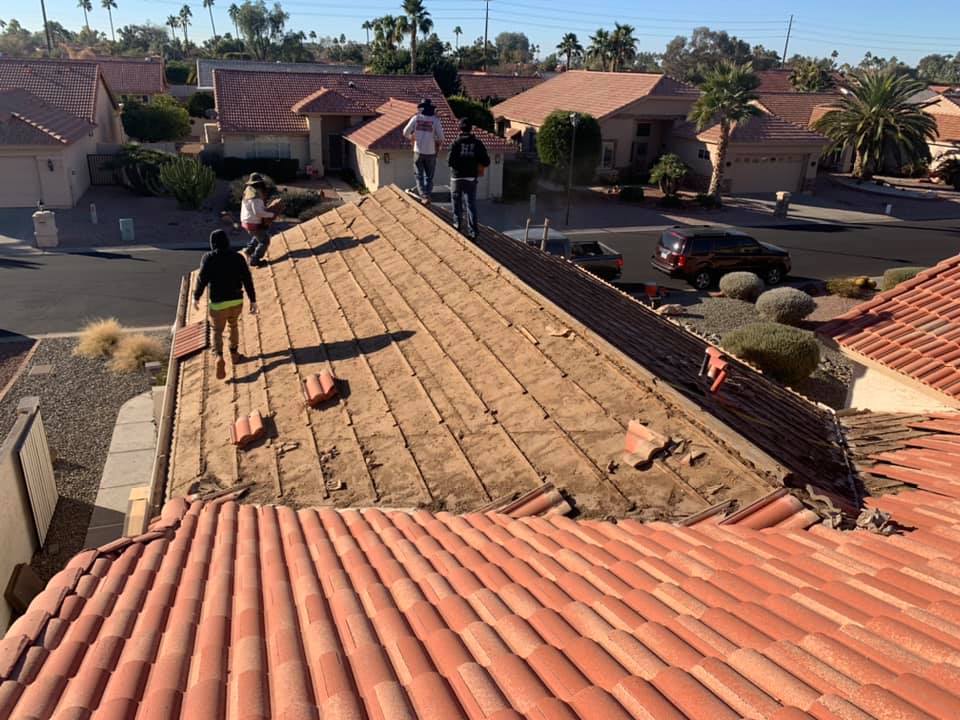
- Lift the bottom course of tile where needed. On many roofs, the closure is installed by carefully removing the first row of tile, fitting bird stop that matches the tile profile, and resetting the tile.
- Repair the surrounding area. If the underlayment or battens at the eave are worn or damaged, it makes sense to address them while the tile is already off.
If your roof is due for a tile lift and relay or new underlayment anyway, that is an ideal time to install fresh bird stop along every eave, since the tile is coming up regardless. For costs, see our roofing cost guide, which explains what drives the price of repairs and re-roofs.
A note on active nests
Pigeons, house sparrows and starlings are the usual tenants under East Valley tile. Some native birds and their active nests are protected by federal law, so if you are not sure what is nesting on your roof, check with a pest control or wildlife professional before nests are removed.
Why late fall and winter are a good time to check
The cooler months are the most comfortable time of year for roof work in the Valley, and closing up the eaves before spring nesting picks up keeps birds from settling in. It pairs well with other winter checks, like clearing valleys before winter storms.
Questions homeowners ask
Is bird stop the same as the critter guard around solar panels?
No. Bird stop closes the openings at the eave of a tile roof. Critter guard is mesh installed around the edge of a solar array to keep birds from nesting under the panels. Our solar panels and your roof guide covers that side of things.
Can bird stop cause leaks?
Bird stop itself doesn't cause leaks, but a closure installed without proper drainage, or one clogged with debris, can hold water at the edge of the roof. That is why it should be installed so water under the tile can still get out.
Do I need bird stop if I haven't seen any birds?
If you have S-tile or barrel tile and the eaves are open, adding it is worth considering. Birds tend to find open eaves eventually, and closing them also helps keep out debris and wind-driven rain.
Can you check my bird stop during an inspection?
Yes. Eaves, closures and the bottom course of tile are part of a roof inspection, along with flashing, valleys, cracked tiles and signs of underlayment wear.
Integrity Roofing has been family owned since 1993 and serves homeowners in Gilbert, Mesa, Chandler and across the East Valley (Arizona ROC #096629). If birds have moved in under your tile, or you want to know whether your eaves are closed up properly, call us at 602-548-3770, Monday to Friday, 7 am to 5 pm. If we don't answer, leave a message and we'll return your call within 24 hours.